

Introducing peaqOS Monetize | Turn Idle Machines into Money Makers

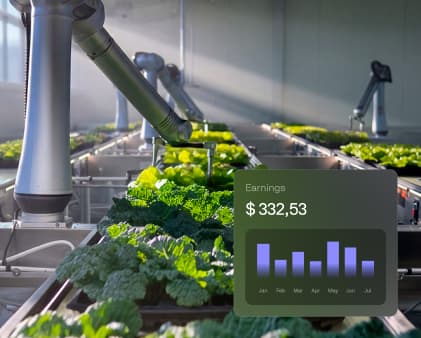
Every robot and machine carries resources it never gets paid for. peaqOS Monetize turns them into revenue, compute, bandwidth storage, connectivity and data first, physical services next: registered with the machine's identity, sold through the networks that need them, settled to the machine's own wallet.
Robots and machines running peaqOS can now monetize the resources they already have. A machine registers what it can offer, compute, storage, data, and connects to the aggregator networks that buy those resources and sell them on. peaqOS handles the identity, the connections, and the payment rails. The machine gets paid, onchain, to its own wallet.
A delivery robot rents out its onboard compute while it waits on the charger. A charging robot fleet sells overnight storage to a network that needs it. A robotaxi sells the road data it records on every shift. The machines were already deployed, already powered, already paid for, each with exactly one revenue stream in mind. Now they carry revenue streams their operators never planned for. peaqOS Monetize is live.

Monetize is the fifth function of peaqOS, and the end state is simple: a machine that can sell anything it's capable of. Idle resources, physical tasks, a drone selling a delivery, a robot selling an hour of work. That's where Monetize is going. It starts with what every machine already carries and can easily make available: compute, storage, and data. From there, it expands to actual physical services. Everything a machine can sell, autonomously, on demand, without human intervention, and the registry, the rails, and the schema are built for all of it.
→ Build with Monetize → https://docs.peaq.xyz/peaqos/functions/monetize
The Hardware Is Already Paid For
The machines are already out there, and most of them are underused. A gateway that peaks for two hours a day. A GPU that inferences in bursts. Storage provisioned for the worst case and empty the rest of the year. The resources exist, the demand exists, and until now nothing connected them.
The operator had two options. Let paid-for hardware sit idle, depreciating with nothing coming back. Or wire each machine into each buyer network by hand: accounts, keys, provisioning, payment details, one bespoke integration per provider, maintained forever.
With peaqOS Monetize, there's a third option: the machine registers once, and peaqOS handles the rest.
Opt In, Plug In, Get Paid
Every monetized machine runs through the same shape:
→ A switch, not a rebuild. A machine registered and bonded with peaqOS opts into monetization with a single, reversible step: it declares what it offers, and an availability endpoint makes it discoverable, and its live capacity queryable, by the networks that buy it.
→ A manifest, not a manual. The peaqOS CLI pulls the target provider's manifest, runs pre-flight checks against its requirements, and provisions the machine as a provider node, step-by-step under the operator's eye, or fully automated. A new provider is a new manifest, not a new integration.
→ A connection, not a job board. Aggregators query the registry for machines that match their needs, propose terms, and the machine owner accepts or declines. Once the connection is active, jobs flow straight to the machine, no per-job negotiation, no middleman routing the work.
→ A wallet, not an invoice. Revenue settles onchain to the machine's own wallet, not a spreadsheet. Every payout is tied to the exact machine that earned it, verifiable by anyone.
That's it. The machine keeps doing its job. Its spare capacity does another.
One Machine, Many Networks
The differentiation isn't the resources, it's the rails. Compute markets exist. Storage networks exist. What didn't exist is a machine that arrives with an onchain identity, its own wallets, and a reputation any counterparty can check, and a layer that manages its network relationships on its behalf.
peaqOS is that layer. A machine can broadcast its capacity to multiple networks at once, compute to one, storage to another, while peaqOS maintains the connections, monitors uptime, and aggregates the payments. Each connection is another revenue stream on the same machine, streams nobody priced in when they bought it. The operator sees one consolidated view of every active connection and every pending payout, instead of managing each provider relationship by hand. The aggregators own their demand side; peaqOS makes the supply side trustworthy and reachable.
And every payout lands against the machine's onchain identity. Earning by earning, the machine builds the financial record that a Machine Credit Rating draws on, the record that makes a machine ratable, and eventually investable. Monetize isn't a marketplace for humans to browse. It's infrastructure the Machine Economy queries.
First What They Have. Then What They Can Do.
Monetize starts with idle resources on purpose. Compute, storage, and data are what every robot and machine already has and can easily make available, and they're self-verifying: the output either checks out or it doesn't, no referee needed. The hardware is already deployed and already paid for, so every job it takes is pure upside for the operator. It's the cleanest possible first market, and it's live today.
Actual physical services are the destination. A drone selling a delivery. A robot selling an hour of actuation. A sensor selling what only its vantage point can see. Those markets need more than rails, they need trust: proof a job was physically done, by a real machine, with a track record to stake on it. That's exactly what Machine Credit Rating and Verify are building toward, and every settled job on Monetize compounds it. The registry and the schema are built to take physical services the day the trust layer is ready.
Showcase: A Machine Puts Itself to Work
We're showcasing Monetize with a demo of the full flow, end to end, from bare machine to first payout.
Here's how the process unravels:
→ A machine is registered and bonded with peaqOS, establishing its onchain identity
→ It opts into monetization and declares its idle resources
→ The peaqOS CLI pulls the provider manifest, passes pre-flight checks, and provisions it as a provider on DEMO PARTNER
→ The network dispatches jobs to the machine
→ The machine owner is paid through peaqOS wallet rails
What Monetize Unlocks
For operators. A machine you bought for one job now runs many revenue streams. Opt in once, and the connections, uptime monitoring, and payouts run on their own, across every network the machine serves. Passive income on hardware you already own, with no custody handed to anyone in the middle.
For aggregators DePINs and DePAIs. A whole new supply side: machines that arrive with verified identity, live availability, and an onchain track record you can check before you connect. No onboarding funnels, no blind trust, query the registry and plug in.
For the robots and machines themselves. They complete their standing as economic participants. They earn for their work, spend from their wallets, and now sell their idle resources, with every payout strengthening the onchain record that makes them creditworthy, and every step building toward the day they sell physical services too.
What's Live in peaqOS Today
→ Activate. Every robot and machine onboarded with a peaqID, omnichain wallets, and a Machine NFT.
→ Qualify. Each one rated with a dynamic Machine Credit Rating.
→ Scale. Each one consuming services and Machine Money Markets through robotic.sh.
→ Stream. Each one turning its data into a signed, verifiable asset, delivered peer-to-peer.
→ Monetize. Each one selling the idle resources it already carries, paid to its own wallet.
Five functions live. Verify and Tokenize come next.
Plug Into Monetize
Build with Monetize. Registration, provisioning, connections, and settlement → https://docs.peaq.xyz/peaqos/functions/monetize
Robots and machines were bought to do one job. Now they get paid for everything else they can do.


