
peaq Makes Strategic Investment in DualMint to Scale Machine and Robot Tokenization

peaq has made a strategic investment in DualMint, deepening a partnership that is accelerating the tokenization of revenue-generating robots and machines into a new asset class.
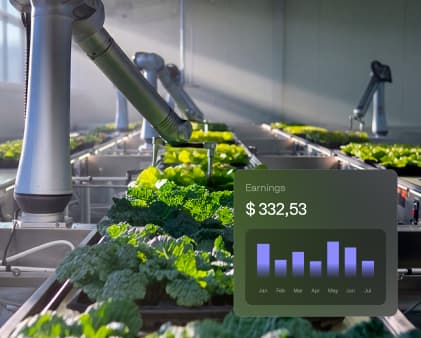
The investment builds on the momentum of tokenized machines becoming a new asset class, piloted with the tokenized robo-farm in Hong Kong, which the two teams launched together in November 2025. That proof-of-concept showed what's possible when physical machines are tokenized and financed onchain — and it set the stage for something bigger. The robo-farm wasn't DualMint's first proof: Across its existing assets, DualMint has delivered a 20% average yield against a 15–20% target across 12 consecutive months of USDC distributions.
Now, the partnership moves from proof of concept to production, making machine tokenization accessible, transparent, and scalable across industries. It brings together DualMint's expertise in operational yield infrastructure, which converts operating revenue from machine-powered small and medium businesses (SMBs) into structured onchain yield, and peaq's omnichain Robot Money system to unlock new financing models, ownership structures, and revenue streams for physical machines and autonomous systems.
Turning machines into a new asset class with peaqOS
Central to this next phase is the integration of peaqOS and peaq's Machine Credit Scoring framework across DualMint's product suite. The DualMint marketplace — already live — and the upcoming Boring Index Vault will both leverage peaqOS to establish verifiable machine identities and enable continuous monitoring of machine activities on-chain. The Boring Index Vault indexes SMB operators across everyday machine categories: service machines, point-of-sale machines, EV chargers, vertical farms. Assets that earn because people use them, with a yield that follows operating hours, not because markets move.
Every machine in the Vault and Marketplace will get a peaq ID, and every data point these machines broadcast will run through peaqOS. The recently announced Machine Tokenization Framework is the critical missing piece — a standardized blueprint for how real-world machines are represented, verified, and tokenized onchain. DualMint's integration of peaqOS means each asset follows the same rigorous standard for identity, performance attestation, and tokenization mechanics. The result: ultimate transparency and observability for investors, who can see exactly where their yields come from — enabling machines to become a trusted and investable new asset class.
Machine Credit Scoring introduces a transparency layer that has been largely absent from machine finance. DualMint underwrites usage risk instead of credit risk. The question isn't whether an operator can repay a loan. It's whether the machine category generates revenue. By tracking operational performance, uptime, and output at the machine level, the framework gives investors, lenders, and participants a reliable way to assess machine-backed assets. This is a foundational step toward making machine financing viable at institutional scale. The output is streaming yield: operating cash flows reconciled and distributed in stablecoins, traced directly to the machines producing them. What's distributed is what was earned.
Machine Money Markets in the Making
The partnership reflects a broader conviction that the machine economy will require new primitives — identity, credit, and transparency — to function. As autonomous machines and robotic systems become economic actors in their own right, infrastructure that can verify what a machine is, what it does, and how well it performs becomes essential.
Together, peaq and DualMint are building toward that future — starting with tokenized machines, and expanding into the financial and operational infrastructure the Machine Economy demands. For a more comprehensive dive into this future and a technical rundown of how peaq’s stack enables it, check out the Purple Paper, your ultimate alpha for onchain robotics.


Explore more

peaq and EintrachtTech Partner to bring Machine Economy Opportunities to Stadium Environments

Acurast Brings Hundreds of Thousands of Processors to peaqOS: More Jobs and More Revenue for Its Network
