
peaqOS turns LG Robots Into Autonomous Economic Actors

peaqOS is now live on LG's CLOiSim environment, powering the first live demonstration of robots that can transact, monetize their skills, and coordinate services autonomously on a pay-per-skill basis. The demo also integrates Tether’s Wallet Development Kit (WDK), enabling embedded machine wallets and autonomous USDT-based settlement flows directly between robots and services.
peaqOS is now live on LG's CLOiSim environment, powering the first live demonstration of robots that can transact, monetize their skills, and coordinate services autonomously on a pay-per-skill basis.
The demo also integrates Tether’s Wallet Development Kit (WDK), enabling embedded machine wallets and autonomous USDT-based settlement flows directly between robots and services.
The setting: a hotel. The implication: a working blueprint for the pay-per-skill economy that robotics has been dying for.
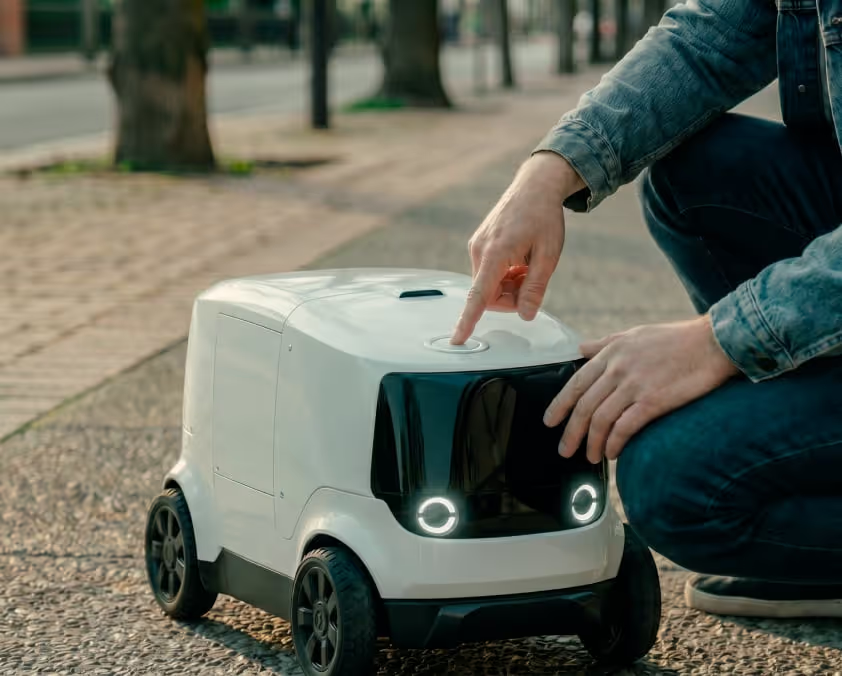
An LG CLOi ServeBot just earned its first onchain settlement. Nobody buzzed for a manager. No invoice was raised. A guest tapped premium room service, OpenClaw picked the right robot for the job, the ServeBot rolled, telemetry confirmed it, and peaqOS settled the transaction. The robot delivered and got paid, onchain, pay-per-skill, all via peaqOS.
That's the difference between automation and autonomous robotic commerce — and it's the difference peaqOS now brings to LG CLOi.
What We Shipped
peaqOS is now integrated with LG's CLOiSim simulation environment, enabling builders — Web3 and Web2 alike — to simulate complex, multi-robot value exchanges inside CLOi, with peaqOS handling identity, coordination, verification, and onchain settlement. It also showcases the pay-per-skill approach for RaaS companies and their clients, enabling the former to monetize premium robot skills and the latter to pay for robots based on the actual use, and unlocking other Web3 services for them, such as Tether WDK.
Inside the demo, peaqOS handles:
- Machine activation. peaqOS grants every robot in the simulation their own decentralized ID, Machine NFT for onchain ownership, and embedded machine wallets via Tether SDK for autonomous payment settlement.
- Machine Trust. Cryptographic attestations of provenance, firmware, and history ensuring smooth and secure operations.
- Machine Services. Task orchestration and dispatching, verified via telemetry data, with immutable onchain audit trails.
- Machine Credit Score. Enabled by all of the above, turning the robot into a trusted financial asset that can be underwritten, traded, and used as a collateral.
The result is the first live demonstration of robots that can:
- Transact directly with services, infrastructure, and one another
- Hold embedded wallets and settle autonomously
- Monetize individual skills, not lump-sum lease contracts
- Coordinate fleet-level workflows without a human in the loop
- Settle transactions without human intervention
The demo runs inside a simulated hotel. Hospitality is the wrapper. Pay-per-skill robotics is the product.

The Demo: Autonomous Room Service
The scene: a simulated hotel staffed by three LG CLOi ServeBots. Mr. Bob, our esteemed guest, taps premium room service and asks for a pizza from the lobby vending machine.
From there, every step is autonomous:
- OpenCLAW confirms the fleet is online and available.
- The system validates Mr. Bob's decentralized identifier (DID) and access permissions.
- OpenCLAW evaluates the available robots in real time and picks the optimal one — weighing availability, distance to the room, and battery level.
- The selected ServeBot navigates the environment and executes the task.
- Live telemetry from the robot streams back into the system to verify successful delivery.
- peaqOS triggers an autonomous onchain settlement using embedded Tether WDK-powered wallets. A transaction hash is displayed, and a permanent tamper-resistant audit record is stored onchain.
No middleman. No spreadsheet. No invoice. Mr. Bob enjoys his pizza; the robot enjoys its margin.

Why Pay-Per-Skill Changes the Math
Today's Robotics-as-a-Service model is rigid. Hotels, hospitals, warehouses and offices sign inflexible lease agreements that don't track demand — paying for capacity they don't use during slow seasons, and unable to customize the package they're stuck with. On the supplier side, manufacturers struggle to monetize premium skills because the contract is the unit, not the work.
The peaqOS + CLOi integration breaks that open.
Robots become economic actors. Fleets distribute tasks among themselves, AI agents break complex jobs into granular skill workflows, and machines pay one another peer-to-peer at every step. Clients pay only for the skills they consume. Manufacturers earn on every premium task, not a flat monthly fee.
That's the pay-per-skill RaaS business model — and the demo is the first time it's been shown end-to-end with real industry hardware in a real-world workflow simulation.

Beyond Hotels & Simulation: Real-World Deployment
The RaaS market is projected to grow to almost $70B by 2030 — a massive expansion from today’s estimated $25B. peaqOS can help the market scale past that mark, expanding its total addressable market 3x, since that’s how many businesses prefer flexible pricing to fixed-terms leases. And the best part is, it can all kick off now.
Robots are already out there, including those running LG CLOi: in hotels, offices, and hospitals; just as far as hospitality alone goes, more than 10,000 hotels around the world are estimated to have deployed robots in some capacity, from deliveries to cleaning. That’s hundreds of thousands of robots that can already go onchain and start capturing this value.
And hospitality is but one example. As more and more industries embrace embodied AI, peaqOS would unlock the same capacities for:
- Smart warehouses
- Autonomous delivery systems
- Airports
- Healthcare facilities
- Retail operations
- Industrial automation
- Smart cities
Any environment where machines need to act for themselves — and get paid for it — can run on the same stack.
What's Next: From Sim to Street
The demo is the start. The next step is real robots, real venues, real revenue.
The Machine Economy needs open infrastructure where robots, devices, AI agents and applications can coordinate securely and transact autonomously. peaqOS + CLOi is that infrastructure, now available for builders to leverage for new use cases inspired by the hotel demo.
This is another step toward a future where machines don't just automate tasks. They participate in open, decentralized economies — and earn. peaqOS is the gamechanger unlocking that; install it now with a one-line command and start onboarding your robots into the Machine Economy.


