peaqOS Unlocks Pay-Per-Skill Leasing for Rainbow Robotics — a New Business Model for Robot Makers
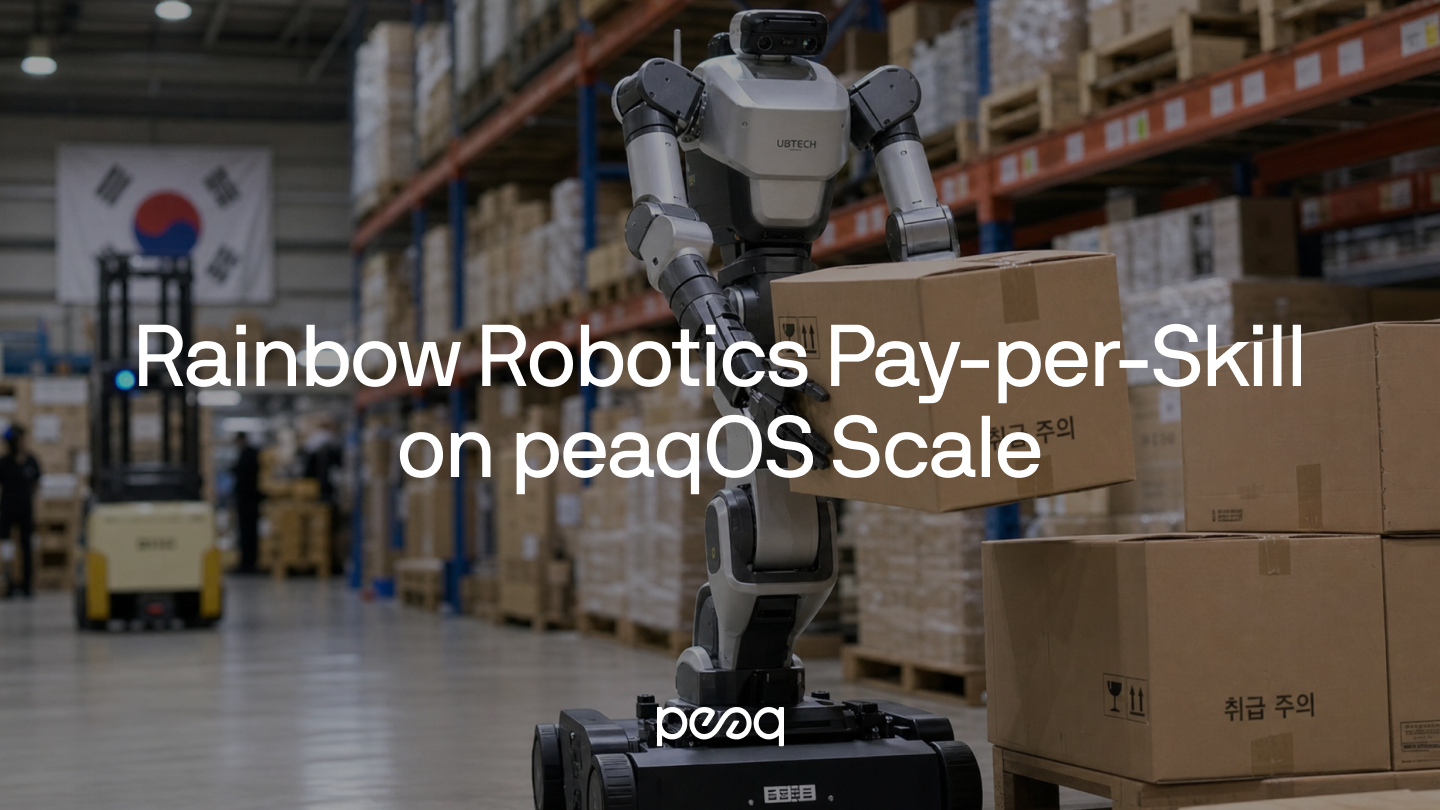


peaqOS Scale and Rainbow’s VCB split one USDT per shipment on Solana — 10% insurer, 70% lessor, 20% manufacturer, forever. The pay-per-skill leasing blueprint, leveraging Tether Wallet Development Kit for machine USDT payments and Walrus for storing proofs in a verifiable way, is live.
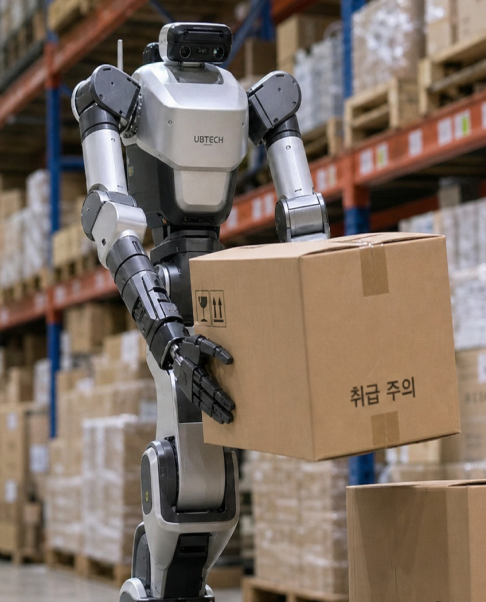
In a warehouse outside Seoul, a Rainbow Robotics humanoid reaches into a shelf, picks up a fragile carton of high-value electronics, scans the barcode, and places it onto an outbound lane. The carton is one of thousands the warehouse will ship today.
The moment the robot completes the skill, one USDT moves on Solana, enabled by the Tether Wallet Development Kit (WDK). Three wallets are credited in the same block. A proof is fired off to Walrus on Sui for verifiable storage.
10% to the insurer covering damage liability. 70% to the leasing company financing the hardware. 20% to Rainbow Robotics, the manufacturer, for the runtime of its own machine.
That third number is the whole story.
Watch the demo below.
What the Demo Shows
This is a public proof-of-concept of peaqOS Scale flexing its omnichain capacity to unlock pay-per-skill leasing for Rainbow Robotics, with payments in USDT on Solana via t=Tether WDK and Walrus on Sui. It’s a working blueprint for pay-per-skill RaaS at full industry weight — manufacturer, lessor, insurer, operator, all settling on the same shipment, in the same transaction, with no humans in the loop.
We reused the NVIDIA Isaac warehouse environment from the recent peaqOS x Akash elastic compute demo, swapped in a Rainbow RB-Y1 humanoid, and wired the economic layer for a new kind of a robotics deal, one where the robot is paid for based on the actual skill usage. The skill is fragile-carton handling — a premium, certified task that pays more than a standard pick.
Inside the demo, peaqOS handles:
- Machine activation. Every robot in the simulation has its own peaqID, Machine NFT, and embedded wallet.
- Machine Trust. Cryptographic attestations of the handling certification, firmware version, and operating history.
- Machine Services. Task orchestration verified by live telemetry, logged onchain.
- Settlement. One USDT per shipment, split 10/70/20 across three counterparties on Solana, in a single block.
- VCB. Rainbow’s pay-per-skill claim on the runtime of every robot it built.
If our LG CLOi demo was a look at the future of hospitality, this one is opening a new chapter for logistics. Korean warehouses move enormous volumes of fragile electronics every year. None of those shipments currently pay the robot’s manufacturer a cent past the day the robot left the factory.
The Skill
The robot’s job is small. The implications are not.
A Rainbow RB-Y1 picks a fragile carton from a shelf, scans the barcode, places it on an outbound lane. Each completed handling is one onchain settlement. The skill is certified — the same robot doing the same task on a different shelf, without the certification attested by peaqOS, would not earn the premium rate.
That’s the unit. Every shelf, every carton, every shipment. Pay-per-skill, not pay-per-month.
One Settlement, Three Counterparties
The split is the substance.
Each successful handling triggers a single USDT settlement on Solana from the buyer’s wallet leveraging Tether’s WDK, the buyer being the electronics manufacturer company running the warehouse. The robot also sends a proof of the successful skill use to Walrus on Sui, for immutable, verifiable storage and auditing.
The proceeds route, automatically, in the same transaction, to three wallets representing the three real roles in any Korean robotics deployment. The named entities below are illustrative stand-ins, not signed customers.
- Insurer — 10%. The party covering damage liability on every fragile shipment. Korea Industrial Insurance is the kind of underwriter this wallet stands in for. They take the risk; they get paid per shipment — not per quarter.
- Lessor — 70%. The financier of the hardware. Mirae Finance Group is the kind of leasing house this wallet represents. They get repaid out of the work the asset actually does, not out of a fixed monthly invoice that has no relationship to throughput.
- Manufacturer — 20%. The OEM that built the robot. Rainbow Robotics is the hardware in the demo. The OEM’s 20% is the part that doesn’t exist in today’s RaaS market — the manufacturer gets paid for the runtime of its own robot.
Three balance sheets. One transaction. No invoices. No reconciliation. The math is settled in the same block the work is verified.
Why Pay-Per-Skill Leasing Changes the Math for the Manufacturer
Today a robotics company sells a robot once.
Margin gets squeezed against the bill of materials, the deal slips onto the leasing company’s books, and the next time that robot generates revenue, the manufacturer isn’t in the room. Every shipment, every facility, every year, for the entire useful life of the machine — the OEM is a spectator.
peaqOS Scale and the VCB flip that.
The manufacturer takes 20% of every shipment the robot handles. Forever. Across every facility that runs its hardware, in Korea or anywhere else. The leasing company finances the deal. The insurer takes the damage risk. The manufacturer owns the runtime.
This is the structural fix the recent peaq essay on robotics financing called for: the collateral isn’t the metal, it’s the data the metal produces. The cashflow isn’t the lease, it’s the work — settled per skill, per shipment, per chain. Pay-per-skill leasing turns a one-off hardware sale into recurring revenue against verified machine output. The manufacturer’s incentive shifts from “ship the unit and move on” to “keep the unit earning.” That’s a different industry.
Beyond One Warehouse
The demo runs in one warehouse with one OEM’s hardware. The model doesn’t.
Any robot running peaqOS can carry the same shape — an onchain identity, a verified credit history, an embedded wallet, and a VCB that lets its maker take a cut of its runtime. Any insurer, anywhere, can plug into the same settlement layer to underwrite a specific skill on a specific machine. Any leasing house can finance against the verified work the robot is already doing.
This is what peaqOS Scale was built for: a one-line install that turns any humanoid, cobot, or AMR into an addressable counterparty for insurance, finance, and manufacturer revenue share — on every supported chain.
The demo is not a Rainbow Robotics partnership. It’s a public proof that the model works with humanoid hardware, with the actual roles a Korean robotics deal involves, and with real USDT moving on real rails.
What’s Next
Robots don’t need a new business model. They need infrastructure that lets the existing business models actually work.
Pay-per-skill RaaS, manufacturer runtime revenue, per-shipment insurance, telemetry-priced leasing — none of these are exotic. They’re variations of structures capital markets have used for decades, applied to a new asset class for the first time.
peaqOS Scale and the VCB are the rails. The Rainbow demo is the first run.
Read more on peaqOS Scale and VCB → docs.peaq.xyz/peaqos/functions/scale
FAQ